


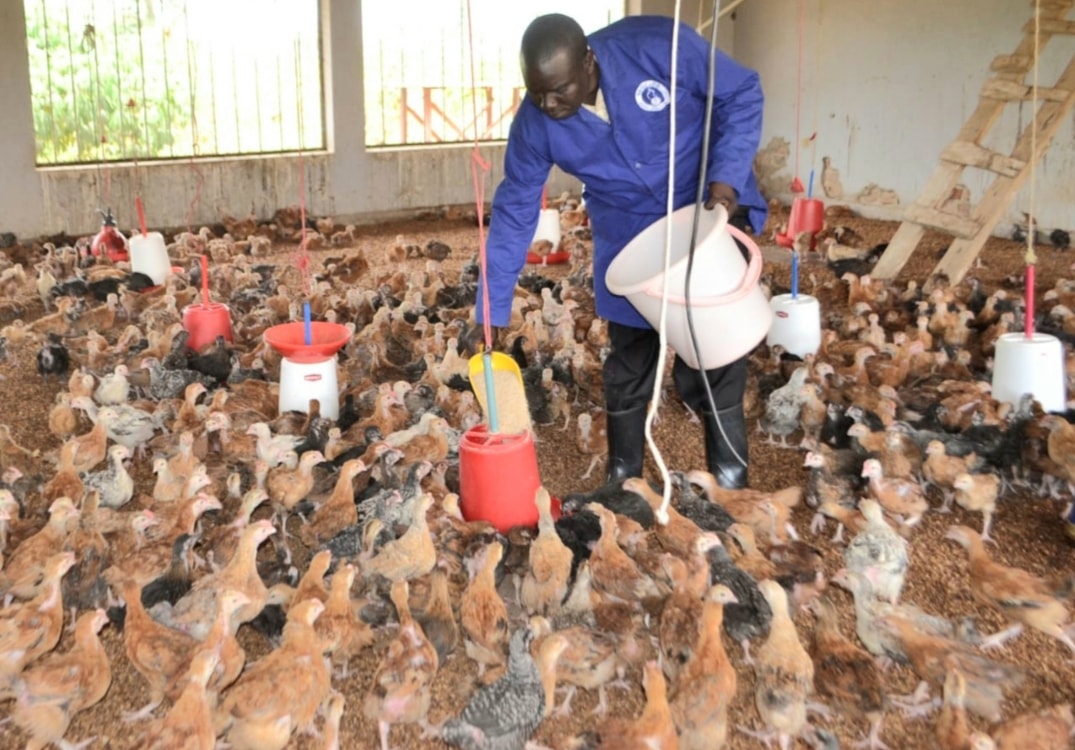
Young farmers across Busoga, Uganda, are celebrating a major boost to poultry farming, thanks to a targeted initiative by the National Animal Genetic Resources Centre and Data Bank (NAGRC&DB). The initiative, executed at the Kasolwe Stock Farm in Kamuli District, is designed to modernize poultry production, improve livelihoods, and enhance food security for rural communities. The program drew hundreds of youth participants and smallholder farmers eager to access superior poultry breeds and technical support, signaling a renewed focus on youth-led agriculture in Uganda.
At the heart of the initiative was the distribution of 50,000 Kuroiler chickens, a dual-purpose breed prized for both meat and egg production. Kuroilers are particularly suitable for smallholder farmers because of their high disease resistance, adaptability to local climates, and rapid growth rates. With proper feeding and care, a single Kuroiler hen can lay up to 200 eggs per year, while also providing a reliable source of meat, offering families a continuous income stream. This breed’s resilience ensures reduced mortality rates, making poultry farming a viable business even for inexperienced farmers.
Beneficiaries also received essential farming inputs, including fertility-enhancing mineral salts and artificial insemination kits, which facilitate the production of superior offspring and ensure long-term genetic improvement in poultry stocks. By combining high-quality birds with modern breeding technologies, the program aims not only to increase production but also to equip young farmers with the skills needed for sustainable poultry management. These inputs are particularly important in Uganda, where small-scale poultry farmers often face challenges such as disease outbreaks, poor nutrition, and limited access to quality breeds.
The event was presided over by Deputy Prime Minister Rebecca Alitwala Kadaga, who highlighted the government’s commitment to empowering youth and transforming the poultry sector. Kadaga emphasized that poultry farming offers substantial opportunities for young Ugandans to generate income, contribute to national food security, and reduce unemployment in rural areas. She encouraged youth to embrace the initiative, adopt best practices in poultry management, and explore poultry as a commercially viable and profitable agricultural venture.
Kasolwe Stock Farm, the venue for the distribution, has emerged as a key hub for poultry breeding, multiplication, and skills development. The farm specializes in high-quality chicken production, feed formulation, disease control programs, and farmer training. Its approach integrates hands-on training for youth and smallholder farmers, covering crucial areas such as proper housing, vaccination schedules, nutrition management, egg production optimization, and biosecurity measures. By imparting practical knowledge alongside providing improved breeds, the farm ensures that poultry farming in Uganda is both profitable and sustainable.
Local organizations, including Uganda First, played an active role in mobilizing over 139 farmer groups to benefit from the program. The presence of these groups highlights a community-focused approach that encourages collaboration, knowledge sharing, and peer support among young farmers. Participants expressed enthusiasm about accessing high-yield breeds, technical support, and modern poultry management tools, noting that these resources significantly improve the potential for successful poultry businesses.
The initiative also underscores the economic potential of poultry farming in Uganda. With proper management, a small flock of Kuroiler chickens can generate consistent income through egg sales, meat production, and even local trade. The program’s emphasis on youth participation ensures that the next generation of Ugandans can leverage poultry farming as a pathway out of poverty, while contributing to the country’s agricultural productivity and national food security goals.
By focusing on poultry, NAGRC&DB is helping to create a resilient, youth-driven agricultural sector in Uganda. The initiative demonstrates that with access to quality breeds, modern breeding techniques, and technical training, young farmers can establish profitable poultry enterprises, strengthen household nutrition, and play a key role in the country’s agricultural transformation.
